💡 How Femicore Works at a Glance
- Stage 1 - Irritant Clearance: Neutralizes metabolic waste, micro-toxins, and bad bacterial byproducts that inflame the sensitive bladder lining (urothelium).
- Stage 2 - Microbiome Shielding: Inoculates the urogenital tract with billions of beneficial Lactobacillus colonies, recreating the natural acidic barrier that prevents irritation.
- Stage 3 - Neuromuscular Toning: Re-educates the detrusor muscle and pelvic sphincter, preventing sudden, involuntary contractions when laughing, sneezing, or exercising.
- Result: Fewer daytime bathroom rushes, complete elimination of embarrassing wet spots, and restful sleep free from constant nighttime waking.
- 1. The Biological Root of Incontinence: Anatomy of a Bladder Spasm
- 2. The Urinary Microbiome: The Missing Link in Pelvic Health
- 3. Phase 1: Flushing Irritants & Soothing the Bladder Mucosa
- 4. Phase 2: Restoring the Keystone Lactobacillus Shield
- 5. Phase 3: Strengthening Sphincter Tone & Calming Detrusor Spasms
- 6. What Happens Week-by-Week: Real Consumer Timeline
- 7. Femicore vs. Prescription Anticholinergics: What Science Shows
- 8. Frequently Asked Questions
1. The Biological Root of Incontinence: Anatomy of a Bladder Spasm
To understand how Femicore works, one must first look at what happens inside the female body during an involuntary bladder leak.
Your bladder is essentially a hollow muscular balloon composed of the detrusor muscle. When your bladder is filling with urine, the detrusor muscle is supposed to remain relaxed, while the sphincter muscle at the base of the bladder stays tightly closed like a drawstring bag.
In a healthy system, you receive a gentle nerve signal when the bladder is roughly half-full. You consciously decide when it is convenient to walk into a restroom, sit down, and relax the sphincter, allowing the detrusor muscle to gently contract and void the urine.
However, in women suffering from overactive bladder (OAB) or urge incontinence, this coordinated communication completely breaks down. The detrusor muscle begins seizing violently and involuntarily—even when the bladder contains only a few tablespoons of liquid. The result is that terrifying, instant surge where you must drop everything and sprint for the nearest toilet.
In stress incontinence, on the other hand, the pelvic floor and sphincter tissues have become relaxed and loose. Any sudden spike in intra-abdominal pressure—a laugh during lunch with friends, a seasonal sneeze, or lifting a laundry basket—forces urine right past the weak seal.
2. The Urinary Microbiome: The Missing Link in Pelvic Health
For decades, mainstream medicine focused exclusively on mechanical and neurological causes: weak pelvic floor ligaments, declining post-menopausal estrogen, or damaged pudendal nerves. But recent clinical discoveries published in leading journals such as Nature Microbiology and the Journal of Urology uncovered a startling third factor: urinary tract microbiome dysbiosis.
The inner lining of the female bladder—the urothelium—is not a barren wall. It is populated by complex colonies of microflora. When a woman is healthy, beneficial Lactobacillus bacteria coat this delicate mucosal lining. These good bacteria produce organic lactic acid and hydrogen peroxide, keeping the environment pristine and calm.
However, modern lifestyle factors—such as chlorine in municipal tap water, dietary micro-toxins, recurrent antibiotics, chronic stress, and hormonal declines—decimate these protective lactobacilli. When the good bacteria vanish, opportunistic pathogens colonize the bladder wall.
These pathogens release microscopic endotoxins and metabolic irritants (such as dioxin-like residues). These irritants inflame the nerve endings embedded in the bladder wall, essentially "short-circuiting" the nervous system and triggering hyperactive, involuntary muscular spasms.
Restore Your Natural Bladder Barrier
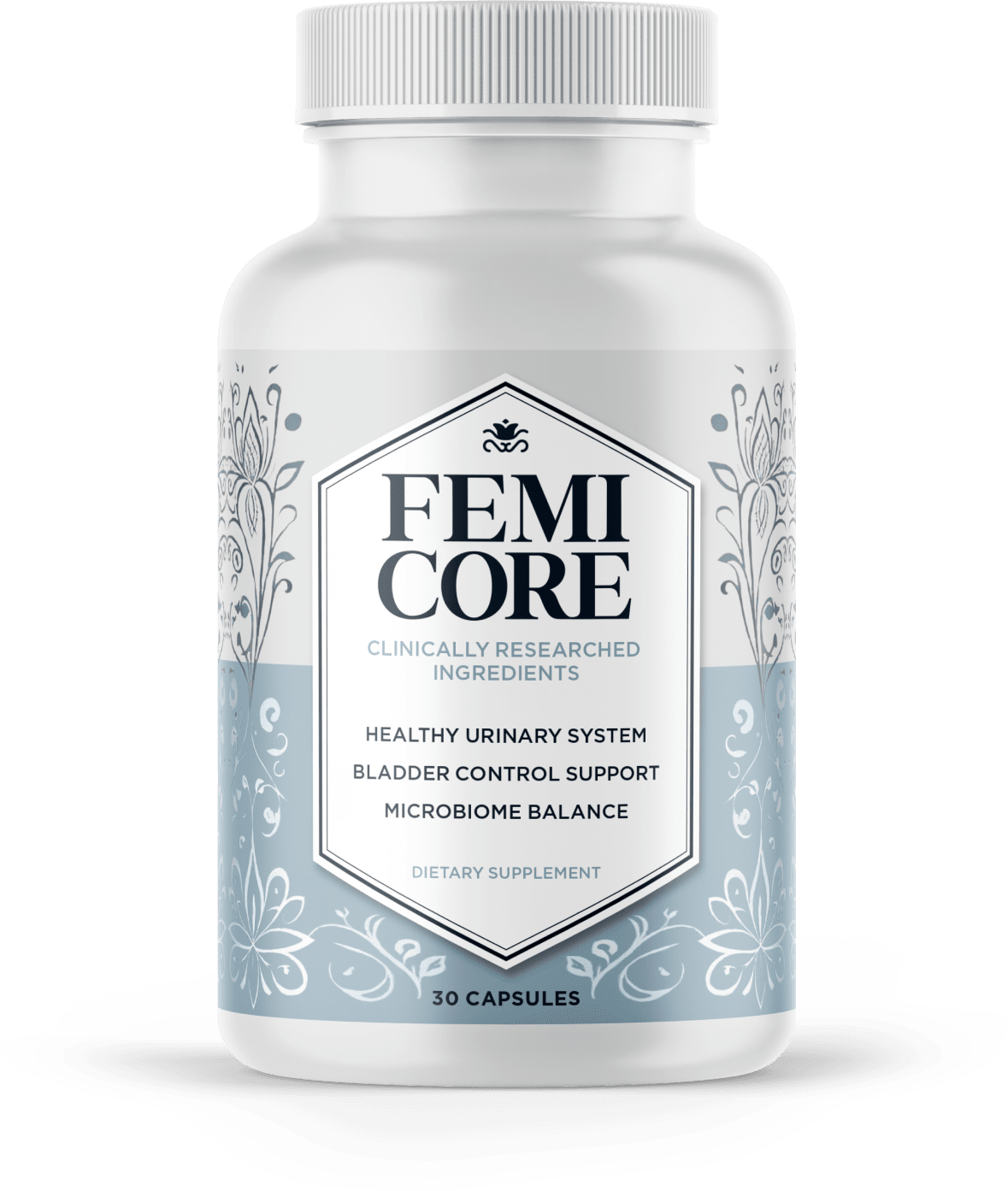
Femicore is formulated with 5 targeted probiotic strains and restorative herbs to calm spasms and stop leaks from the inside out.
Claim Your Discounted Bottles Now →3. Phase 1: Flushing Irritants & Soothing the Bladder Mucosa
The first stage of Femicore's action begins within hours of taking your daily capsule. As the capsule dissolves in the upper gastrointestinal tract, its concentrated botanical extracts enter the bloodstream and filter through the renal system into the urinary pathways.
- Mimosa Pudica: Acts as an internal soothing balm. It produces a therapeutic mucilage that coats the irritated urothelial walls, calming burning, stinging, and micro-inflammation.
- Bearberry (Arbutin): Once in the bladder, arbutin transforms into active hydroquinone conjugates, binding to cellular waste products and neutralizing environmental irritants that provoke the bladder nerves.
- Cranberry PACs: Supplies high concentrations of Type-A Proanthocyanidins. These molecular compounds act like Teflon on the bladder wall, dislodging unwanted bacteria and allowing them to be gently flushed away with ordinary urination.
By removing these inflammatory triggers, the bladder's sensory nerves finally stop sending emergency "panic signals" to the brain.
4. Phase 2: Restoring the Keystone Lactobacillus Shield
Clearing irritants is only half the battle; without repopulation, opportunistic pathogens will simply return within days. This is why conventional cranberry pills or single antibiotics fail to provide lasting relief.
Femicore solves this by inoculating the urogenital tract with billions of colony-forming units (CFUs) across five specific female-focused probiotic strains:
- Lactobacillus Crispatus: The undisputed "keystone" species of female urogenital defense. Clinical trials show that women with robust L. crispatus colonization experience up to 80% fewer urinary urges and intimate discomfort compared to women lacking this strain.
- Lactobacillus Acidophilus: Reinforces the gastrointestinal-urinary axis, ensuring harmful coliform bacteria from the bowel do not migrate across the perineum into the urethra.
- Lactobacillus Plantarum: A remarkably rugged strain that survives stomach bile, adhering firmly to mucosal walls and producing natural antimicrobials that suppress rogue microbes.
- Lactobacillus Gasseri & L. Casei: Work in tandem to balance inflammatory cytokines and alleviate lower pelvic bloating, relieving downward pressure on the bladder neck.
5. Phase 3: Strengthening Sphincter Tone & Calming Detrusor Spasms
Once microbial balance is established and inflammation subsides, the neuromuscular structures of the pelvic bowl can finally heal and regain tone.
The natural astringents found in Mimosa pudica and granular berberine help tighten the smooth muscle fibers surrounding the urethral sphincter. When the sphincter muscle is nourished, it forms a tight, secure seal that easily resists sudden pressure spikes caused by coughing, sneezing, laughing, or exercising.
Meanwhile, with mucosal nerve endings no longer irritated by acidic urine and toxic residues, the detrusor muscle returns to its natural, compliant rhythm. The bladder can now expand comfortably to hold 12 to 16 ounces of urine without triggering panic sensations, enabling long car rides and uninterrupted night-long sleep.
6. What Happens Week-by-Week: Real Consumer Timeline
Because Femicore works through biological nourishment rather than chemical sedation, results unfold systematically over time:
Weeks 1 to 2: The Calming Phase
Botanical antioxidants begin clearing mucosal irritants. Most women notice that the intense, sudden "needle-like" urgency sensations soften. Nighttime waking often decreases from 4 or 5 times down to 1 or 2 times.
Weeks 3 to 4: The Microbial Restoration Phase
Probiotic colonies successfully establish along the urogenital tract. Women report going 3 to 4 hours between bathroom visits during the day without anxiety. The small "cough and sneeze" leaks diminish substantially.
Weeks 6 to 12: Structural Tone & Permanent Freedom
The pelvic sphincter and detrusor muscles regain coordinated tone. Light panty liners can typically be abandoned completely. Daily activities like exercise classes, playing with grandchildren, and long road trips are resumed with total peace of mind.
7. Femicore vs. Prescription Anticholinergics: What Science Shows
Many women ask how Femicore compares to standard pharmaceutical options such as oxybutynin or tolterodine. Here is an evidence-based comparison:
| Feature | Femicore | Prescription Anticholinergics |
|---|---|---|
| Method of Action | ✓ Rebuilds microbiome & fortifies tissue | Blocks acetylcholine receptors chemically |
| Common Side Effects | ✓ None reported (gentle on stomach) | Severe dry mouth, blurred vision, constipation |
| Long-term Health Impact | ✓ Enhances immune & digestive wellness | Associated with cognitive decline risks in seniors |
| Requires Prescription? | ✓ No (100% dietary supplement) | Yes (requires clinic visits & copays) |
| Satisfaction Guarantee | ✓ 60-Day 100% Money-Back Guarantee | Non-refundable pharmacy sales |
8. Frequently Asked Questions
Medical curricula often lag behind cutting-edge genomic research by 10 to 15 years. The dogma that the bladder was "sterile" was taught in medical schools for over a century. However, modern urological research institutes across the country are rapidly incorporating urogenital microbiome science into clinical practice.
Standard grocery store cranberry cocktail contains massive amounts of refined sugar or artificial sweeteners, which actually feed pathogenic bacteria and irritate the bladder lining. Furthermore, juice does not supply the critical Lactobacillus crispatus bacteria or Mimosa pudica astringents that stop involuntary muscular spasms.
Most clinical evidence indicates that using Femicore consistently for 90 to 180 days ensures deep probiotic colonization and tissue remodeling. After achieving your desired control, many women continue on a maintenance dose or enjoy lasting comfort indefinitely.